
A homeowner's air conditioner stops working during a heat wave. They find your HVAC company online and call, but your technicians are on jobs and nobody answers. By the time you return the call the next morning, they have booked another contractor.
The lost job may have had nothing to do with your prices or workmanship. The problem was what happened after the homeowner reached out.
When HVAC leads are not converting, spending more on ads is not always the answer. Missed calls, unclear website pages, slow follow-up, and poor lead routing can all cost you work. Use these seven steps to find where inquiries get stuck and make it easier for homeowners to book.
HVAC leads not converting? Map the customer journey
A call or form submission is only the start. Your team still needs to make contact, understand the issue, confirm the service location, and schedule the next step.
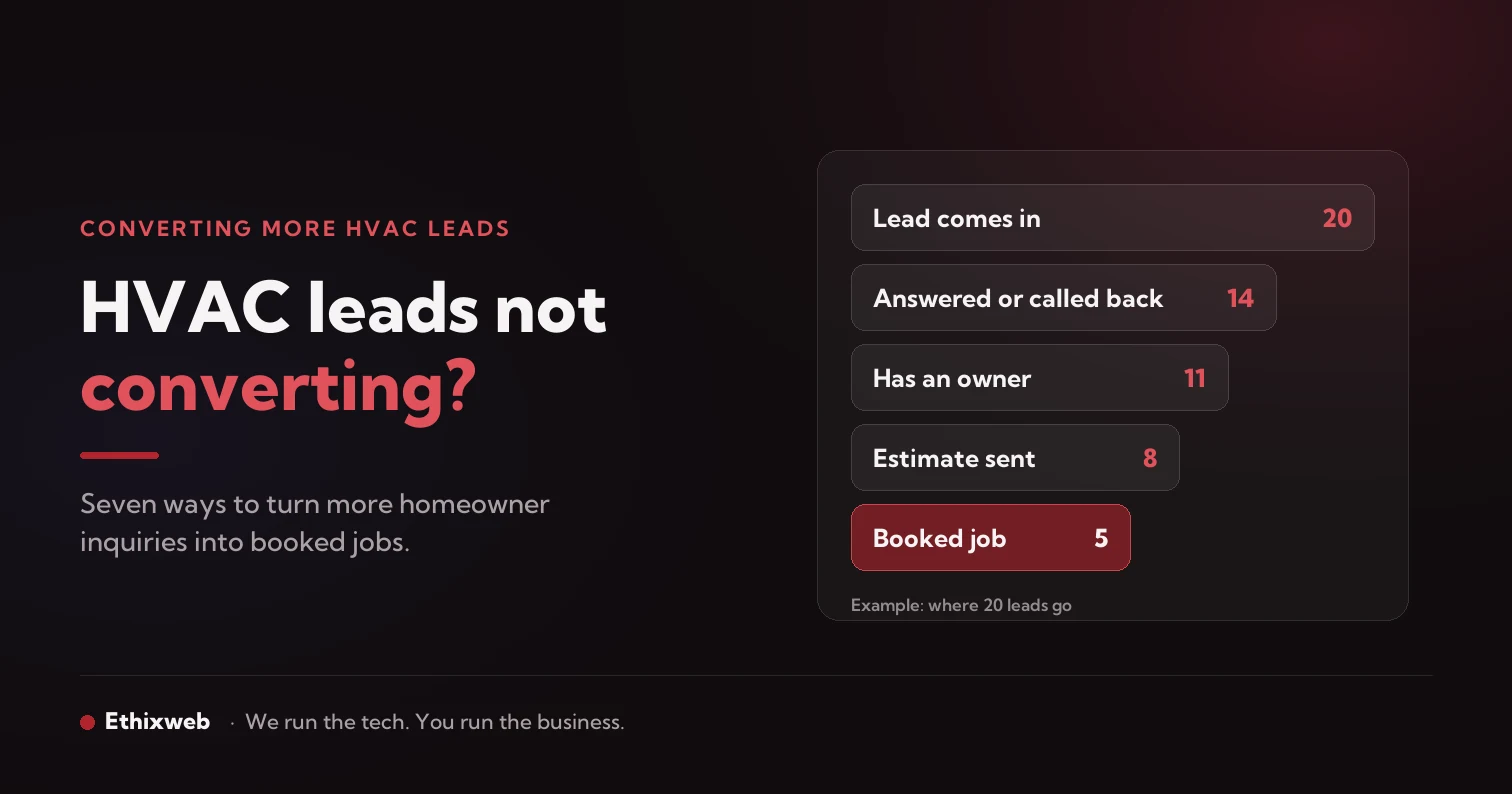
Review each stage: how many leads do you reach? How many are qualified? How many receive an estimate or appointment? Comparing these numbers helps you find where potential customers drop off.
1. Make your website easy to use
A homeowner with a broken AC should not have to search for your phone number. Place a tap-to-call number and a clear action, such as "Schedule HVAC Service" or "Request an Estimate," near the top of important pages.
Create separate pages for AC repair, heating repair, installation, and maintenance. List the cities or ZIP codes you serve, and explain what happens after someone submits a form. Test the website on a phone: keep text readable, buttons easy to tap, and forms short. These basics support better HVAC website conversions, and our guide to what an HVAC website needs to book more jobs goes deeper.
2. Have a plan for missed calls
Technicians may be driving or working when calls arrive. Decide who handles overflow and after-hours inquiries. Options include call forwarding, an answering service, or an AI receptionist that collects the caller's location, service need, and preferred callback time.
Route urgent no-heat or no-cooling calls to the right person. An automatic text can confirm that a request was received, but set a realistic response expectation and follow up with a person when needed.
Missed calls can also affect responsiveness in Google Local Services Ads. Google identifies responsiveness as one factor that can influence ad ranking. See what missed calls really cost a contractor for how the numbers add up.
3. Give every HVAC lead an owner
A form submission can get buried in a busy inbox. Assign each inquiry to a team member and define the next action. That person should acknowledge the request, record the service and location, attempt contact, and set a reminder if the homeowner does not answer.
Follow up on estimates after they are sent, and confirm appointments with the date and arrival window. A CRM or field-service platform can organize reminders and customer history. The tool matters less than having a process your team uses consistently.
4. Route inquiries to the right person
A no-heat call tonight is different from a planned furnace replacement next month. Capture the service type, urgency, ZIP code, and preferred timing so your team can respond appropriately.
Route emergencies to the on-call contact, maintenance requests to scheduling, and larger installation projects to an estimator. This contractor lead management process helps prioritize work without making customers repeat themselves.
5. Build trust before the appointment
Before booking, homeowners want to know whether you serve their area, who may arrive, and what the visit involves. Use genuine team and project photos, and keep your Google Business Profile hours, phone number, services, and service area accurate.
Explain relevant licenses and certifications accurately. Tell customers whether a diagnostic fee applies and what they can expect during the visit. After completed work, invite honest feedback and respond professionally. Do not offer incentives or selectively request positive reviews, because Google's review policy prohibits these practices. Our guide to getting more Google reviews shows how to ask the right way.
6. Track leads beyond calls and form fills
Call and form totals do not show how many inquiries became appointments or completed jobs. Track each lead's source, service, contact status, estimate or appointment, booking, and revenue when available.
Compare channels by outcomes, not volume alone. Fewer inquiries can be more valuable if they produce the right jobs. Connect calls and forms to the CRM or job-management system your team already uses, and keep the tracking simple enough for staff to maintain. Call tracking for HVAC and plumbing companies is a good place to start.
7. Fix conversion gaps before raising ad spend
When the schedule has openings, more advertising may seem like the answer. First, check whether current inquiries are handled well. More traffic will not fix unanswered calls or forgotten estimates.
Review your 20 most recent leads: how many were reached, qualified, scheduled, quoted, and booked? Record known loss reasons, such as location, timing, price, or unavailable services. Fix the weakest stage before increasing your budget.
Turn more HVAC inquiries into booked jobs
If HVAC leads are not converting, the next improvement may happen after the lead arrives. Make the next step clear, assign responsibility, and measure whether inquiries become scheduled work. Start with your last 20 leads, identify one recurring problem, and review the results after a few weeks.
Ethixweb helps HVAC, plumbing, and other home service businesses improve the path from online discovery to customer inquiry through HVAC website design, local SEO, advertising, AI receptionists, and CRM integrations. Explore our HVAC and plumbing marketing services or book a conversation to discuss how your lead process could work harder.